
Cryptocurrency and Blockchain: What You Need to Know
Introduction
Cryptocurrency and blockchain are two tech buzzwords that seem to pop up everywhere—from news headlines and social media to investment apps and online ads. For many people, though, these topics still feel confusing, intimidating, or overly technical. You might be wondering: Is cryptocurrency real money? Is blockchain only for Bitcoin? Do I need to understand coding to get involved?
The good news is that you don’t need to be a tech expert or financial guru to understand the basics. Cryptocurrency and blockchain are tools—just like email, online banking, or cloud storage—that can be explained in simple terms. Whether you’re just curious, thinking about investing a small amount, or want to understand why these technologies matter, this guide will walk you through everything step by step.
Let’s break it all down in plain English and help you decide if crypto and blockchain are worth paying attention to.
Understanding Cryptocurrency: Basics and Key Concepts
At its core, cryptocurrency is digital money. Unlike traditional money (like dollars or euros), cryptocurrencies exist entirely online and aren’t controlled by a central authority such as a bank or government.
The most well-known cryptocurrency is Bitcoin, but there are thousands of others, including Ethereum, Litecoin, and Solana. These are often referred to as “altcoins” (alternative coins).
Key concepts to know
- Decentralization: Cryptocurrencies aren’t managed by one company or government. Instead, they run on networks of computers around the world.
- Digital wallets: To store cryptocurrency, you use a digital wallet. This can be an app, a piece of software, or even a hardware device.
- Public and private keys: Think of your public key as your account number and your private key as your password. Keeping your private key secure is critical.
- Volatility: Cryptocurrency prices can rise and fall quickly. This makes crypto exciting for some people—but risky for others.
Cryptocurrency can be used for more than investing. Some people use it to send money internationally, pay for goods and services, or participate in online communities and games.
What Is Blockchain and How Does It Work?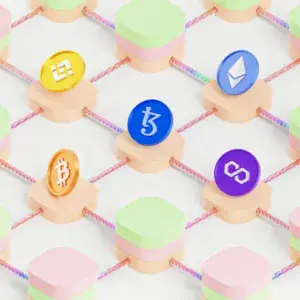
If cryptocurrency is the money, blockchain is the technology that makes it work.
A blockchain is essentially a digital ledger—a shared record of transactions that anyone on the network can view but no one can easily change.
How blockchain works (simplified)
- A transaction is created (for example, sending crypto to someone).
- That transaction is grouped with others into a “block.”
- The block is verified by the network using cryptography.
- Once verified, the block is added to the chain permanently.
Each block links to the one before it, forming a chain—hence the name blockchain.
Why blockchain matters
- Transparency: Transactions are visible to the network.
- Security: Once data is added, it’s extremely difficult to alter.
- Trust without middlemen: You don’t need a bank or third party to verify transactions.
Beyond cryptocurrency, blockchain is being explored for gaming.
Pros and Cons of Cryptocurrency and Blockchain
Like any technology, cryptocurrency and blockchain come with both advantages and drawbacks. Understanding both sides helps you make smarter decisions.
Pros
- Financial control: You have direct ownership of your funds.
- Global access: Anyone with internet access can participate.
- Fast transactions: Some cryptocurrencies allow near-instant transfers.
- Innovation: Blockchain is enabling new services like decentralized finance (DeFi) and NFTs.
Cons
- Price volatility: Values can change dramatically in short periods.
- Learning curve: Wallets, keys, and exchanges can be confusing at first.
- Security risks: Scams, phishing attacks, and fake projects exist. See more about cybersecurity in today’s digital world.
- Regulation uncertainty: Laws and regulations vary by country and are still evolving.
For many beginners, the biggest challenge isn’t the technology—it’s knowing where to start safely.
Getting Started with Cryptocurrency and Blockchain
If you’re interested in trying cryptocurrency, the key is to start small and move carefully.
Step 1: Learn before you invest
Spend time understanding basic terms and how wallets and exchanges work. Free resources, guides, and videos are widely available. For more on cryptocurrency basics, check out our in-depth guide.
Step 2: Choose a reputable exchange
Crypto exchanges are platforms where you buy and sell cryptocurrency. Look for well-known exchanges with strong security features and good user reviews. The importance of cybersecurity in today’s digital world cannot be overstated when dealing with exchanges.
Step 3: Set up a wallet
You can keep crypto on an exchange, but many users prefer a personal wallet for better control. Software wallets are beginner-friendly, while hardware wallets offer extra security. If you want tips for keeping your digital files organized and safe, check out our helpful strategies.
Step 4: Start small
Never invest money you can’t afford to lose. Even experienced users start with small amounts when learning. See more about getting started with crypto and blockchain for beginners.
Step 5: Stay secure
- Enable two-factor authentication
- Never share your private keys
- Be cautious of “guaranteed returns” or unsolicited messages—protect yourself from cybersecurity risks
Step 6: Explore blockchain beyond crypto
You don’t have to buy cryptocurrency to learn about blockchain. Explore how it’s used in gaming, digital art, and data security.
Conclusion
Cryptocurrency and blockchain can seem overwhelming at first, but when you strip away the hype, they’re simply new tools designed to solve old problems—like trust, transparency, and global access to money and data. You don’t need to be an investor or developer to understand their impact.
For typical users, the smartest approach is curiosity paired with caution. Learn the basics, understand the risks, and explore at your own pace. Whether crypto becomes a part of your financial life or not, blockchain technology is already shaping the future of how we interact online.
Have questions, thoughts, or experiences with cryptocurrency or blockchain? Drop a comment below—your perspective might help someone else who’s just getting started!