
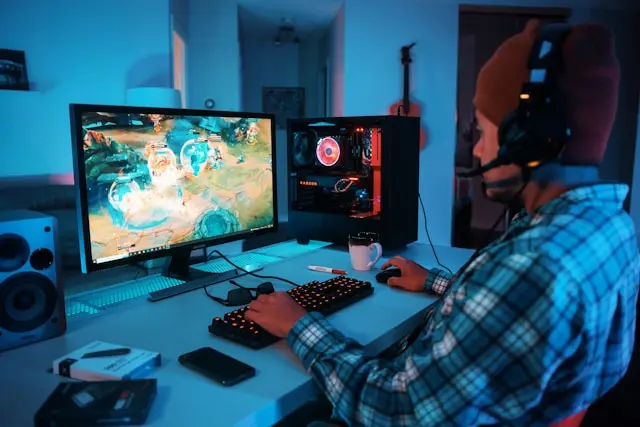
Guides for Competitive Gaming in Different Genres
Introduction
Competitive gaming has become one of the most exciting aspects of modern gaming. Whether you’re climbing ranked ladders, participating in online tournaments, or simply trying to improve your skills against other players, competitive gaming offers challenges that can keep players engaged for years.
One of the reasons competitive gaming is so popular is the variety of genres available. Some players enjoy the fast reflexes and precision required in first-person shooters (FPS), while others prefer the strategic teamwork found in Multiplayer Online Battle Arenas (MOBAs). Meanwhile, fighting games, strategy games, and battle royale titles each offer their own unique competitive experiences.
For newcomers, entering competitive gaming can feel intimidating. Experienced opponents, complex mechanics, and ranking systems can sometimes create a steep learning curve. The good news is that every skilled player started as a beginner, and improving often comes down to understanding fundamentals, practicing consistently, and learning from mistakes.
In this guide, we’ll explore the basics of competitive gaming and provide tips for several popular genres. Whether you’re looking to improve your rank or simply become a better player, these strategies can help you get started.
Understanding the Basics of Competitive Gaming
Before focusing on any specific genre, it’s important to understand the core principles that apply to competitive gaming as a whole.
Focus on Fundamentals
Many players immediately look for advanced strategies when they start playing competitively. However, mastering the basics often provides the biggest improvement.
Fundamental skills include:
- Map awareness
- Positioning
- Resource management
- Decision-making
- Communication
- Consistency
Strong fundamentals create a solid foundation regardless of the game you’re playing.
Learn the Game’s Mechanics
Every competitive game has unique systems and mechanics. Spending time understanding these systems can give you an advantage over players who rely only on instinct.
Consider learning:
- Character abilities
- Weapon characteristics
- Movement mechanics
- Objective systems
- Economy systems
- Game-specific strategies
Knowledge often separates good players from average ones.
Practice With Purpose
Simply playing matches isn’t always enough to improve.
Effective practice includes:
- Reviewing mistakes
- Practicing specific skills
- Studying experienced players
- Setting improvement goals
Focused practice tends to produce faster results than playing casually without analyzing performance.
Stay Positive
One common issue in competitive gaming is frustration.
Losses happen to everyone, including professional players. Treat losses as learning opportunities rather than failures.
Maintaining a positive mindset helps:
- Reduce stress
- Improve focus
- Increase consistency
- Support long-term improvement
Patience is often one of the most valuable competitive gaming skills.
First-Person Shooters (FPS)
FPS games are among the most popular competitive genres. Titles in this category often emphasize aiming, movement, positioning, and teamwork.
Improve Your Aim
Aim is one of the most important skills in FPS games.
Ways to improve include:
- Adjusting mouse sensitivity
- Using aim training software
- Practicing tracking and flick shots
- Developing muscle memory
Consistency is more important than constantly changing settings.
Master Map Knowledge
Knowing the map provides a significant advantage.
Learn:
- Common player routes
- Choke points
- Objective locations
- Sightlines
- Flanking opportunities
Good map awareness often allows players to predict enemy movement.
Positioning Matters
Many new players focus entirely on aiming while ignoring positioning.
Strong positioning helps by:
- Reducing exposure to enemies
- Creating advantageous angles
- Improving survivability
- Supporting teammates
Smart positioning can often outperform raw mechanical skill.
Communication and Teamwork
In team-based shooters, communication is critical.
Useful communication includes:
- Enemy locations
- Objective updates
- Strategy adjustments
- Resource availability
Clear and concise communication improves team coordination significantly.
Common FPS Mistakes
Avoid:
- Overextending alone
- Ignoring objectives
- Reloading unnecessarily
- Tunnel vision on individual fights
Balancing aggression with smart decision-making often leads to better results.
Multiplayer Online Battle Arenas (MOBAs)
MOBAs are highly strategic games that combine teamwork, character mastery, and objective control.
Learn a Small Hero Pool
One mistake many new players make is constantly switching characters.
Instead:
- Choose a few heroes
- Learn their strengths
- Understand their weaknesses
- Master their abilities
Specialization often leads to faster improvement.
Understand Roles
Most MOBAs divide players into specific roles.
These may include:
- Tank
- Support
- Damage dealer
- Jungler
- Carry
Understanding your role helps your team function more effectively.
Focus on Objectives
Many beginners become overly focused on eliminations.
In MOBAs, objectives usually matter more than individual kills.
Prioritize:
- Towers
- Neutral objectives
- Resource control
- Team fights with purpose
Objectives are often the true path to victory.
Develop Game Awareness
Strong MOBA players constantly monitor:
- Minimap activity
- Enemy positions
- Cooldowns
- Team status
Awareness helps prevent surprise attacks and creates opportunities for strategic plays.
Common MOBA Challenges
New players often struggle with:
- Information overload
- Complex item systems
- Team coordination
- Match pacing
Taking time to learn gradually can make the experience much less overwhelming.
Fighting, Strategy, and Battle Royale Games
These genres each require different skills, but many competitive principles still apply.
Fighting Games
Fighting games emphasize:
- Timing
- Precision
- Matchup knowledge
- Prediction
Improvement often comes from mastering a single character and learning how to react to opponents effectively.
Helpful strategies include:
- Learning basic combos
- Practicing defensive techniques
- Understanding frame advantages
- Studying common matchups
Patience is often just as important as aggression.
Strategy Games
Real-time strategy (RTS) and turn-based strategy games focus heavily on decision-making.
Important skills include:
- Resource management
- Multitasking
- Planning
- Adaptability
Strong strategy players often win through superior decisions rather than faster actions alone.
Battle Royale Games
Battle royale games combine survival, combat, and resource management.
Success often depends on:
- Smart positioning
- Efficient looting
- Map awareness
- Risk assessment
While mechanical skill is important, strategic decision-making frequently determines the outcome of matches.
Adapting to Different Genres
One of the best ways to improve across multiple genres is developing transferable skills such as:
- Situational awareness
- Decision-making
- Communication
- Mental resilience
These skills remain valuable regardless of the game you play.
Common Competitive Gaming Issues
Across all genres, players often encounter:
- Burnout
- Frustration
- Ranking anxiety
- Inconsistent performance
Taking breaks, setting realistic goals, and focusing on improvement rather than rankings can help maintain long-term enjoyment.
Conclusion
Competitive gaming offers exciting challenges and opportunities for personal growth. Whether you prefer the fast-paced action of FPS games, the strategic depth of MOBAs, the precision of fighting games, or the survival elements of battle royale titles, there is a competitive genre suited to nearly every type of player.
The key to success isn’t simply playing more games—it’s practicing with purpose, learning from mistakes, and focusing on steady improvement over time. Building strong fundamentals, maintaining a positive mindset, and understanding the unique demands of your chosen genre can dramatically improve your performance.
Remember that even the best players started as beginners. Progress may feel slow at times, but consistency and patience often produce the greatest results.
What competitive games do you enjoy playing? Do you have any tips, strategies, or memorable competitive gaming experiences to share? Let us know in the comments below—we’d love to hear from fellow gamers and learn about your journey in competitive gaming!